
Introduction
Saskatchewan’s Ministry of Environment is developing a provincial program to restore several hundred kilometres of legacy linear features, including old roads, trails, and seismic lines with no reclamation obligation, as well as those burned in the 2025 fire season affecting high-quality caribou habitat. Funded through the 2BT program, the Ministry completed its initial inventory and field assessment phase in 2024 on its first linear feature project area and has now shifted to operational planning.
The project is being led by the Lands Branch — Habitat Restoration team at the Ministry. As a member of the restoration team, conservation specialist Kathleen Gazey focuses on implementing the 2BT program. Her forestry career is varied—spanning academia, industry and government. She has taught silviculture and forest ecology to forestry students at Lakehead University, worked as a planning forester in the interior of British Columbia and an area forester for the Government of Saskatchewan in Meadow Lake. Now located in Regina, she brings that varied experience to planning 2BT restoration projects. As expected, linear feature restoration presents a different set of challenges from typical forest renewal projects.
This case study reviews how the Saskatchewan Ministry of Environment is approaching site prioritization, restoration treatment selection, stakeholder and rightsholder engagement, and logistics planning for linear features. It also illustrates how much time, investment, and institutional capacity are required to build a restoration program from scratch. For organizations at similar stages of development, it offers a practical reference and a realistic measure of what genuine program readiness requires. That context makes the funding question all the more urgent: the expertise and systems that programs like Saskatchewan’s have spent years developing represent a significant public investment—one that risks being dismantled if stable, long-term funding does not follow the end of 2BT.
How Saskatchewan’s Ministry of Environment is building a boreal caribou habitat restoration program from the ground up, and what early-stage organizations can learn from the process.
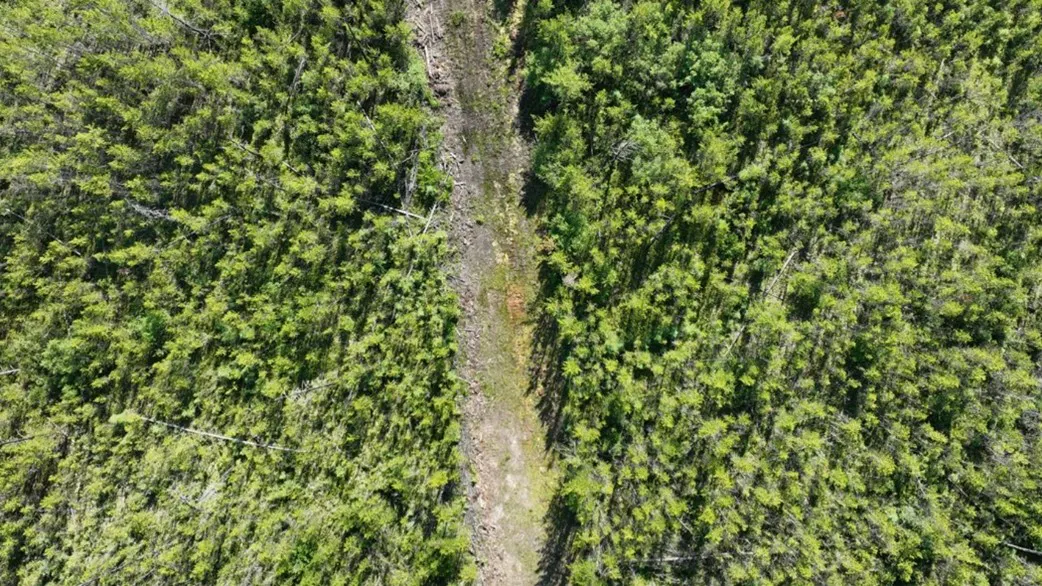
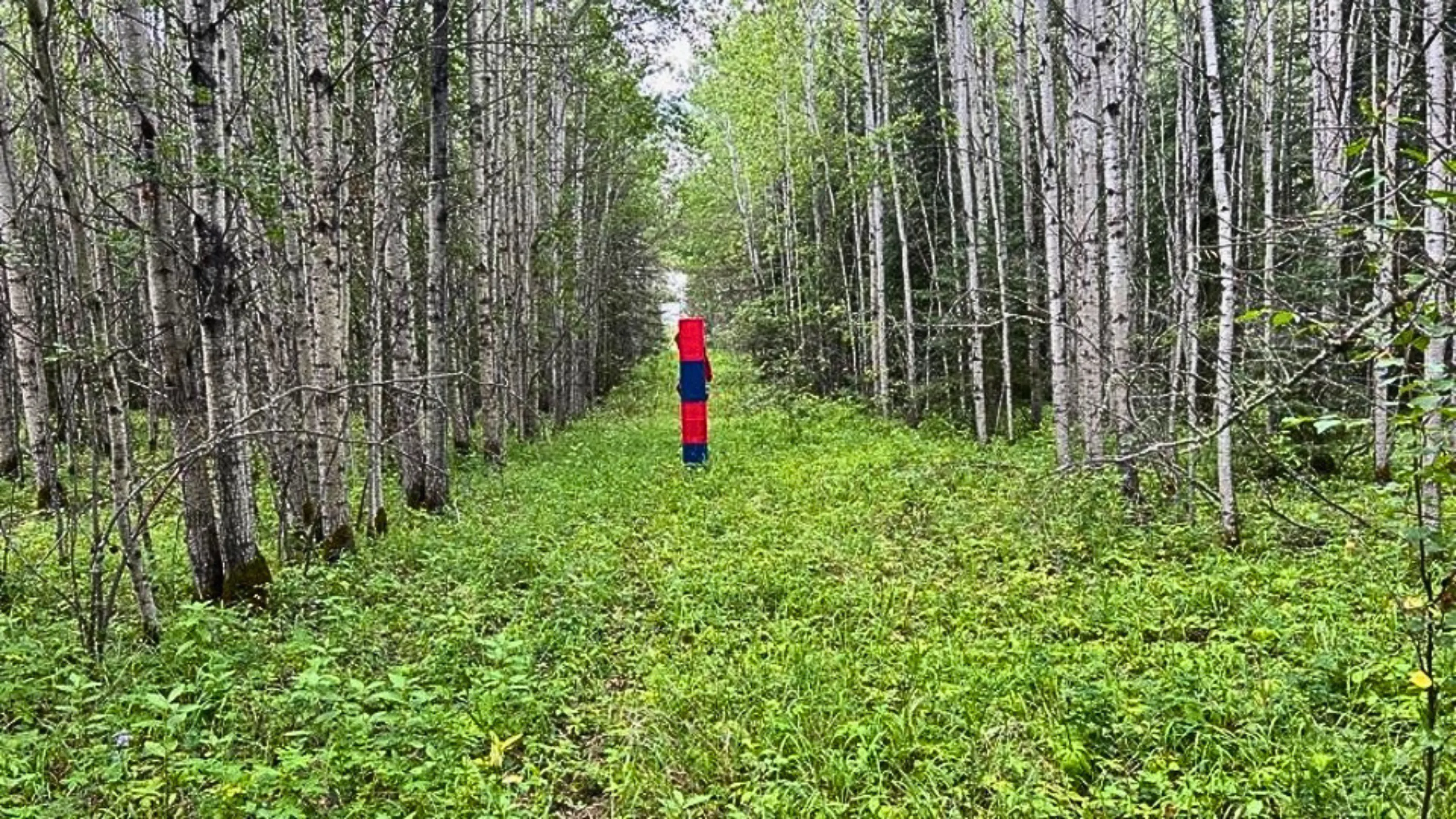
A linear feature cuts through the Government of Saskatchewan’s restoration pilot project south of Cold Lake Air Weapons Range (Credit: Government of Saskatchewan)
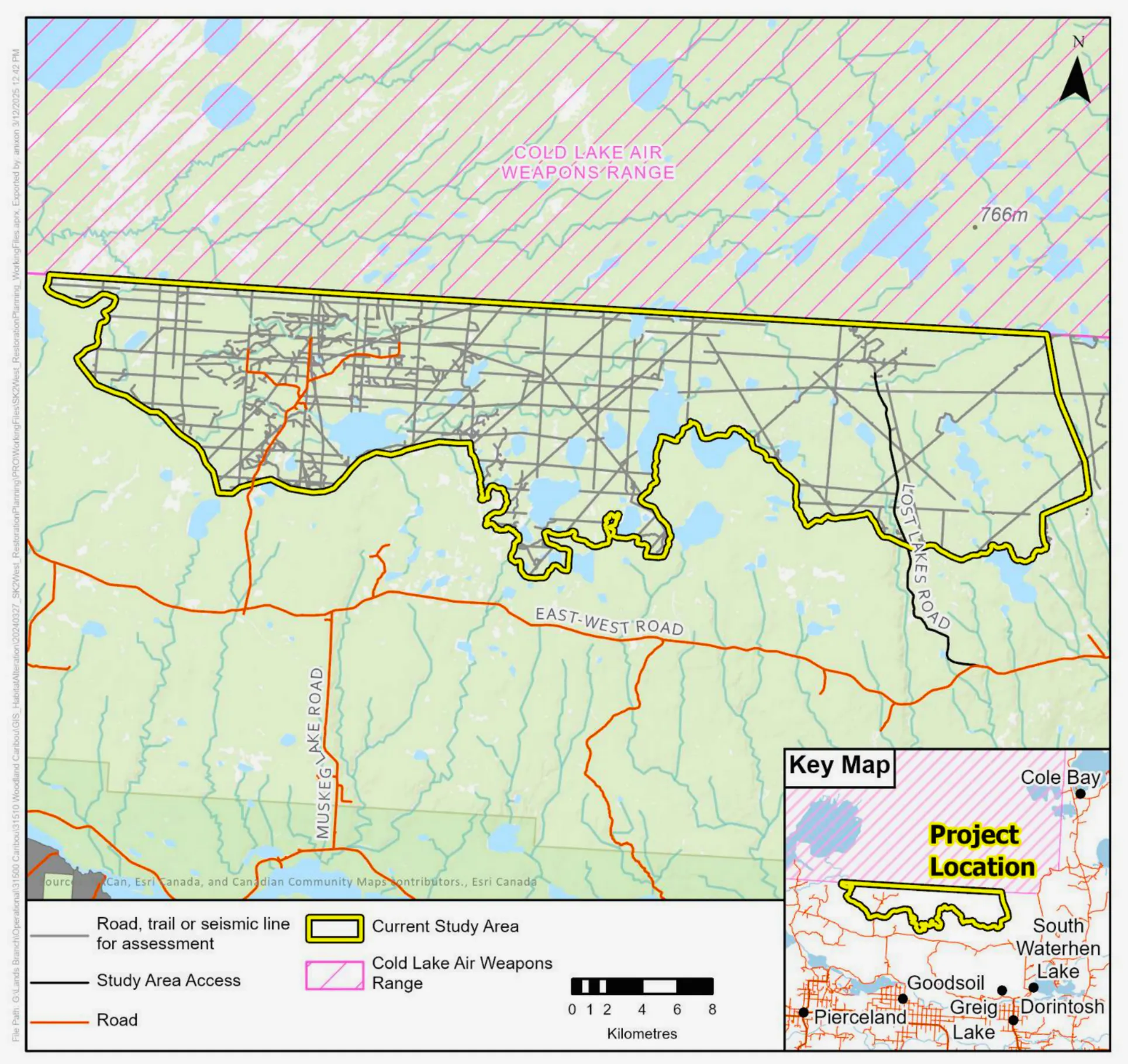
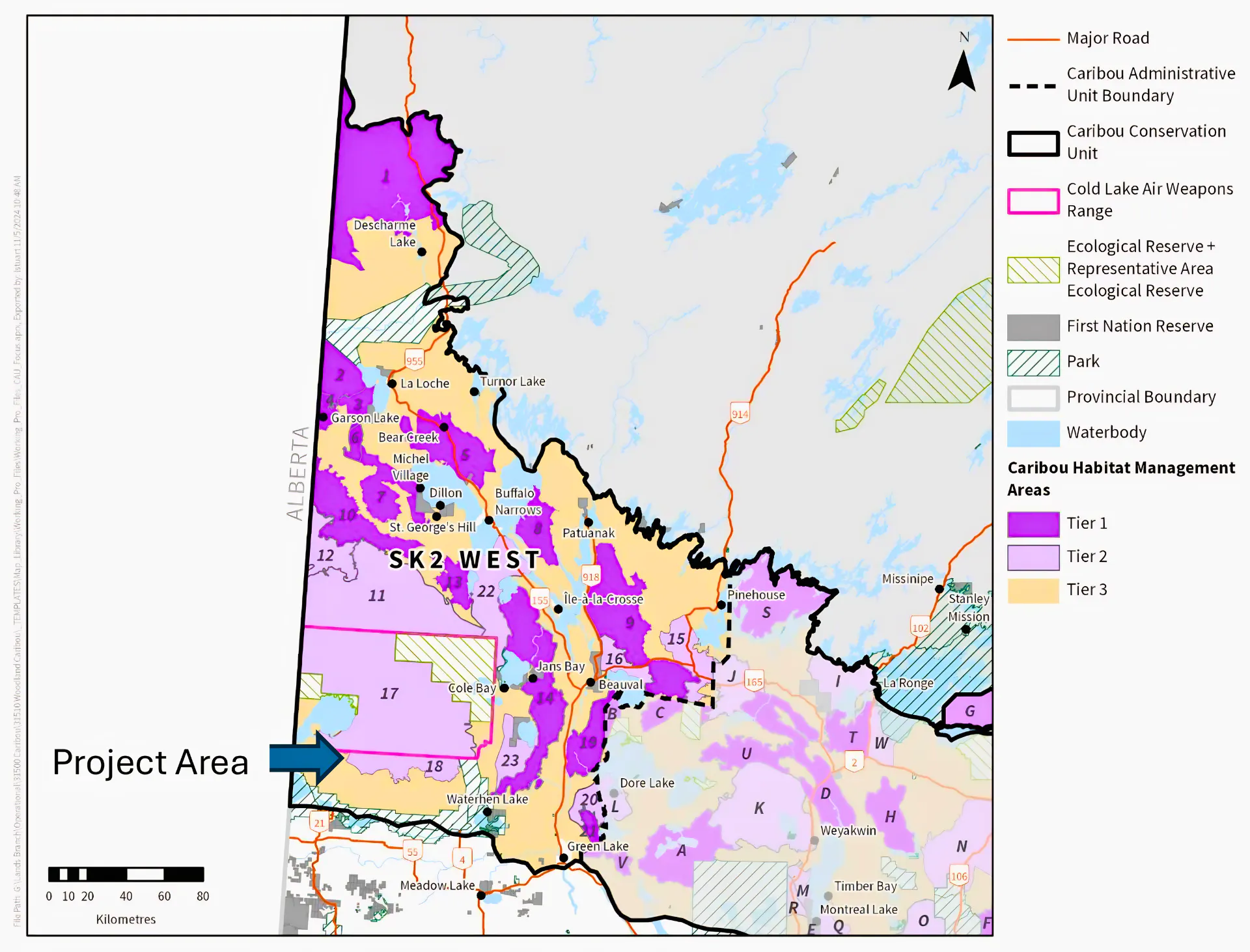
The pilot project area (yellow boundary) sits just south of the Cold Lake Air Weapons Range in the SK2 West Caribou Conservation Unit.



'%3e%3cpath%20fill-rule='evenodd'%20clip-rule='evenodd'%20d='M20%202.5C20%201.1202%2018.8798%200%2017.5%200H2.5C1.1202%200%200%201.1202%200%202.5V17.5C0%2018.8798%201.1202%2020%202.5%2020H17.5C18.8798%2020%2020%2018.8798%2020%2017.5V2.5Z'%20fill='white'/%3e%3cpath%20d='M5.73489%206.97852H2.38489V17.0552H5.73489V6.97852Z'%20fill='%23234A43'/%3e%3cpath%20d='M4.0825%202.12012C2.93637%202.12012%202.1875%202.87363%202.1875%203.86125C2.1875%204.82812%202.91359%205.60242%204.03816%205.60242H4.0598C5.22789%205.60242%205.95496%204.82812%205.95496%203.86125C5.93328%202.87363%205.22797%202.12012%204.0825%202.12012Z'%20fill='%23234A43'/%3e%3cpath%20d='M13.9561%206.74219C12.1792%206.74219%2011.3832%207.71941%2010.9375%208.40582V6.97914H7.58838C7.63279%207.92434%207.58838%2017.0557%207.58838%2017.0557H10.9375V11.4282C10.9375%2011.127%2010.9591%2010.8259%2011.0479%2010.6106C11.2896%2010.0091%2011.8411%209.38594%2012.7664%209.38594C13.9778%209.38594%2014.4631%2010.3103%2014.4631%2011.6643V17.0557H17.8124V11.2772C17.8124%208.18203%2016.1598%206.74219%2013.9561%206.74219Z'%20fill='%23234A43'/%3e%3c/g%3e%3cdefs%3e%3cclipPath%20id='clip0_263_1629'%3e%3crect%20width='20'%20height='20'%20fill='white'/%3e%3c/clipPath%3e%3c/defs%3e%3c/svg%3e)
